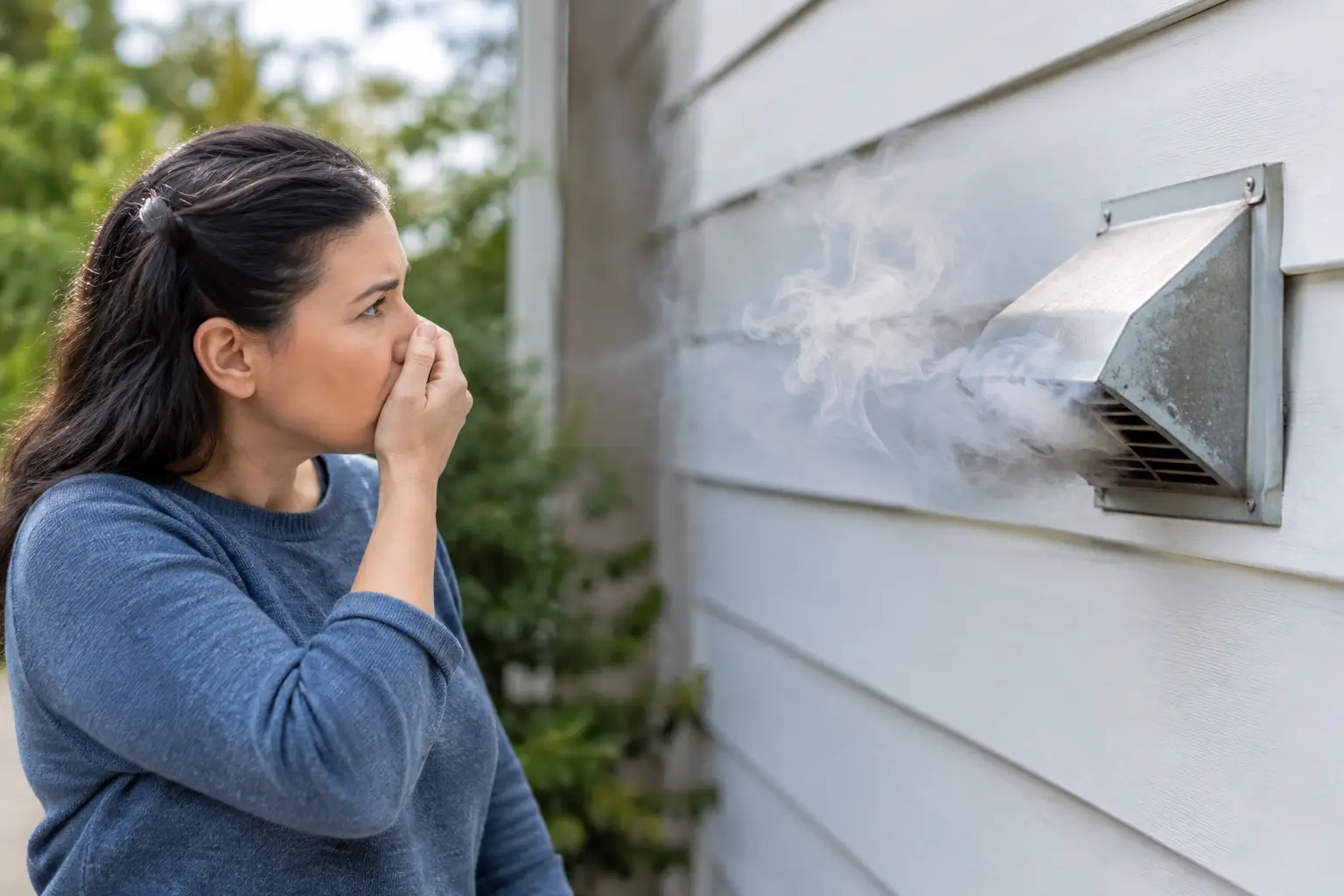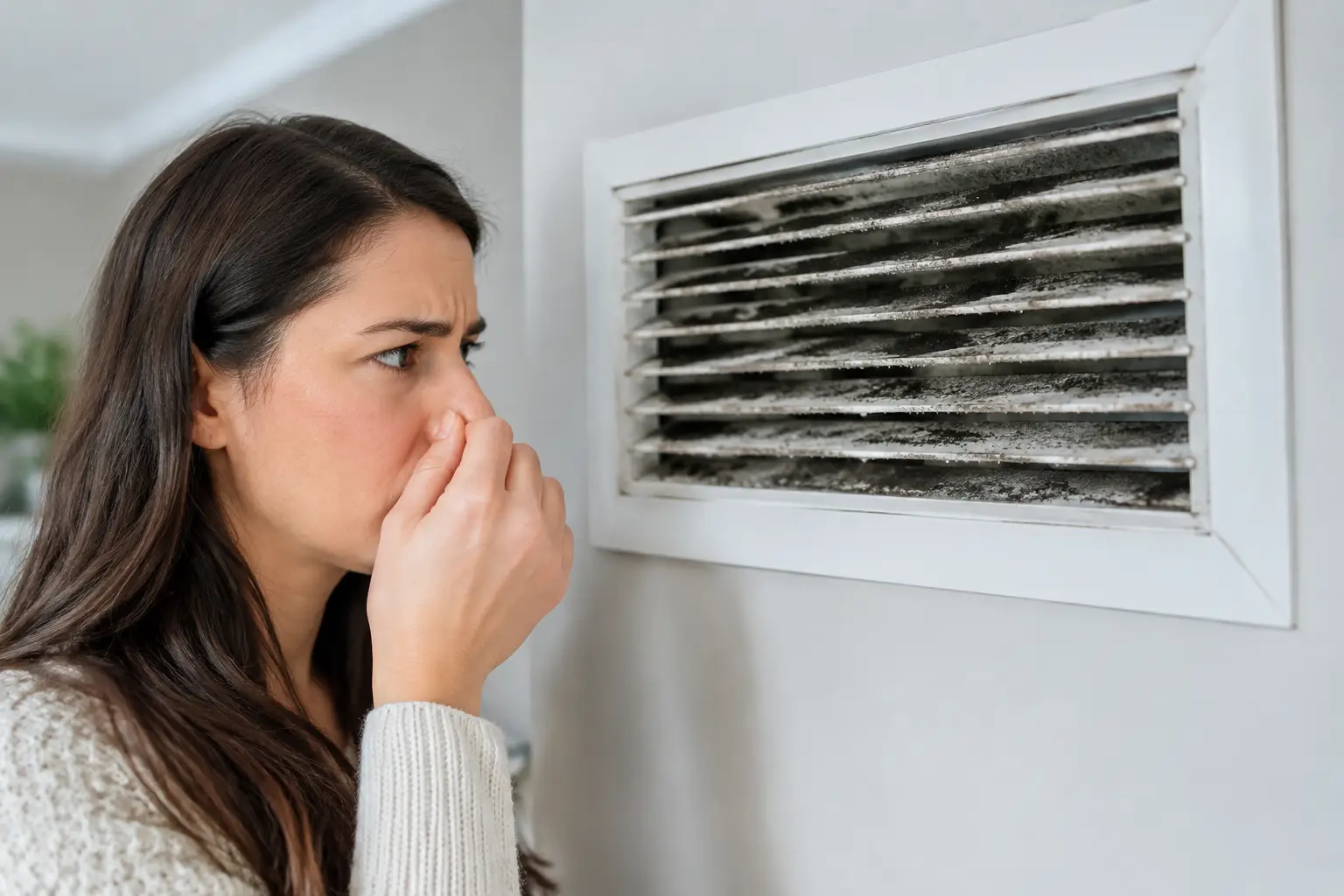
That damp-basement odor that appears the moment your air conditioner starts is not something to cover with candles or room spray. A musty smell when AC runs usually means moisture and organic buildup are somewhere in or around the cooling system. The source may be minor and easy to correct, but it can also signal a drainage issue, a dirty evaporator coil, or contaminants circulating through the ductwork.
For homeowners, landlords, and property managers in Mt. Airy, Maryland, the practical goal is simple: identify the moisture source, stop the odor from returning, and protect the air people breathe indoors. Here is what that smell can mean and what to do next.
Why Your AC Can Smell Musty
Air conditioners do more than lower the temperature. As warm indoor air passes over the cold evaporator coil, water vapor condenses and should flow safely into a drain pan and condensate line. That normal process creates a damp environment inside the system.
When dust, pet dander, pollen, or other debris collect in those damp areas, mildew and mold-related growth can develop. The AC then moves air across the buildup and sends the odor through supply vents. You may notice it most strongly at startup, after the system has been off for several hours, or in rooms closest to the air handler.
A musty odor does not automatically prove that there is widespread mold in every duct. It does mean the system deserves attention. Ignoring persistent moisture can lead to more buildup, reduced cooling performance, and uncomfortable indoor air for family members, employees, tenants, and guests.
Common Causes of a Musty Smell When AC Runs
A dirty evaporator coil
The evaporator coil is one of the most common sources of an AC odor. It stays cold while the system runs, so condensation forms on its surface. A layer of dust on the coil gives moisture something to cling to, creating conditions where odors can develop.
Coil cleaning is not usually a homeowner job. The coil is located inside the air handler or furnace cabinet, and improper cleaning can damage delicate fins or leave cleaning residue behind. An HVAC professional can inspect the coil, confirm whether it is the source, and clean it properly.
A clogged condensate drain or drain pan
Condensation needs a clear path out of the system. If the drain line is partially clogged with algae, sludge, dust, or debris, water may back up into the drain pan. Standing water creates a musty smell and can eventually cause leaks, ceiling damage, or damage around the equipment.
Watch for water near the indoor unit, a full or overflowing drain pan, unusually high indoor humidity, or an AC system that shuts off unexpectedly. These signs call for prompt service, especially if the unit is installed in an attic, closet, or finished area of the home.
Dirty air filters and return vents
A filter will not typically create a strong mold smell by itself, but a heavily loaded filter can worsen the conditions that cause one. Restricted airflow allows more dust to settle in the system and may keep the coil damp longer than it should be.
Check the filter monthly during heavy cooling season. Replace it based on the manufacturer’s guidance and your home’s conditions. Homes with pets, active children, construction dust, or allergy-sensitive residents often need more frequent changes.
Moisture or debris in ductwork
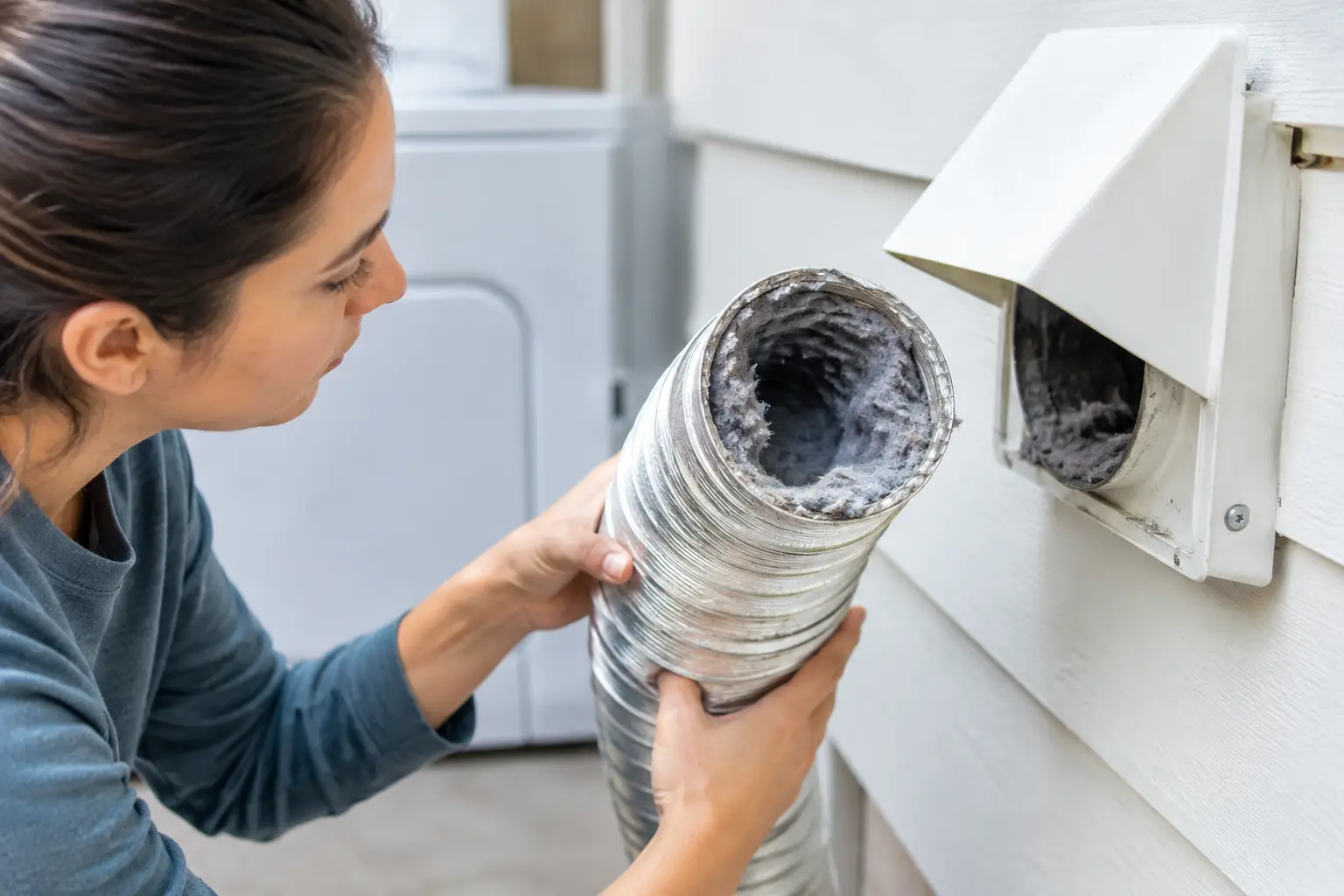
Ducts can collect ordinary household dust over time. If moisture enters or remains in part of the duct system, that dust can hold odors and may support mold-related contamination. Duct issues are more likely when there has been a roof leak, plumbing leak, flooding, disconnected ductwork, poor insulation, or condensation in a humid attic, crawl space, or basement.
You may suspect ductwork when the odor is strongest from several vents, dust blows out when the system starts, or the smell returns soon after coil or drain maintenance. A thorough inspection helps determine whether cleaning is appropriate and, just as importantly, whether the underlying moisture problem has been repaired.
An oversized system or short cycling
Sometimes the problem is not a dirty component but the way the system runs. An oversized air conditioner may cool the house so quickly that it does not run long enough to remove sufficient humidity. This is called short cycling. The house can feel cool but clammy, and damp conditions can make musty odors more noticeable.
This situation requires an HVAC evaluation rather than duct cleaning alone. The right solution may involve equipment settings, repairs, airflow adjustments, or humidity control. Addressing the cause is the best way to prevent the odor from returning.
What You Can Safely Check First
Start with the simple checks that do not require opening electrical equipment or entering ducts. Replace a dirty filter, make sure supply and return vents are not blocked by furniture, and look around the indoor unit for visible water. If you can safely see the condensate drain pan, check for standing water or overflow.
Also pay attention to when the odor appears. Is it only at startup? Does it occur after rain or during very humid weather? Is it limited to one room, or does every vent carry the smell? These details help a technician narrow down the likely cause.
Avoid spraying fragrances, disinfectants, or bleach into vents or onto AC components. These products can mask the issue without removing it, introduce chemicals into the air stream, and potentially damage equipment. Do not run the system if you see active leaking, extensive visible growth, or damaged wiring. Turn it off and arrange for qualified service.
When Professional Cleaning Makes Sense
Professional attention is worthwhile when the odor persists after a filter change, returns every cooling season, or accompanies visible moisture or poor airflow. The service needed depends on the inspection findings.
An HVAC technician may need to clean the evaporator coil, clear the condensate line, repair drainage components, or address an airflow problem. If the ductwork contains heavy dust, debris, or moisture-related contamination after the source has been corrected, professional air duct cleaning can remove material that continues to hold odors.
At Bob’s Air Duct, the focus is on thorough, practical service that supports cleaner indoor air and reliable system performance. Specialized equipment allows trained technicians to remove built-up debris from the duct system while treating your home and property with care. For commercial spaces, a clean ventilation system can also help create a more comfortable environment for staff and customers.
It is worth setting realistic expectations. Duct cleaning cannot fix an active roof leak, a clogged drain line, an oversized AC unit, or ongoing humidity problems. A reputable provider should identify these limits clearly and recommend the right next step rather than treating cleaning as a cure-all.
How to Prevent Musty AC Odors From Returning
Prevention centers on controlling moisture and limiting the dust that feeds buildup. Keep up with filter changes, schedule seasonal HVAC maintenance, and make sure condensate drainage is inspected before peak summer weather arrives. If your home feels humid even while the AC is running, ask an HVAC professional to assess humidity levels and system operation.
It also helps to keep return vents clean and unobstructed, repair water leaks quickly, and check attics, crawl spaces, and basements for dampness. In Maryland’s humid summer conditions, insulation and duct sealing matter because warm, humid air entering unconditioned spaces can contribute to condensation.
If your home has experienced water damage, renovation dust, pest activity, or years of neglected duct maintenance, an inspection can provide peace of mind. The goal is not just to make the smell disappear for a day. It is to remove the buildup, correct the moisture source, and help your cooling system deliver the clean, comfortable air your household expects.
A musty odor when the AC turns on is your home’s way of asking for a closer look. Address it early, and you can often avoid larger moisture problems while keeping your indoor environment fresher, safer, and more comfortable through the season.