A dryer that once finished a normal load in 45 minutes but now needs two or three cycles is doing more than testing your patience. If you are asking, why is my dryer taking longer, the answer may be as simple as an overloaded drum or as serious as restricted airflow in the dryer vent. Either way, longer dry times waste energy, add wear to clothing, and can point to a preventable fire risk.
The dryer works by moving warm, moist air out of the drum and through the vent to the outdoors. When that air cannot escape efficiently, moisture stays trapped in the load. The appliance keeps running, clothes remain damp, and heat can build up where it should not. A few safe checks can help you narrow down the cause.
Why Is My Dryer Taking Longer Than Usual?
Most long-drying problems come down to one of three things: too much moisture going into the dryer, not enough heat, or poor exhaust airflow. The first two may be related to laundry habits or the appliance itself. The last one often involves lint buildup in the vent system and deserves prompt attention.
A blocked lint screen reduces airflow
The lint screen should be cleaned before every load, not only when it looks full. Even a thin, nearly invisible layer of residue from dryer sheets, fabric softener, or detergent can restrict airflow through the screen.
Remove the screen and wash it periodically with warm water, mild dish soap, and a soft brush. Let it dry completely before putting it back. If water pools on the mesh instead of passing through, residue is likely interfering with airflow. Cleaning the screen is a good first step, but it does not address lint farther inside the machine or vent line.
The dryer vent may be clogged with lint
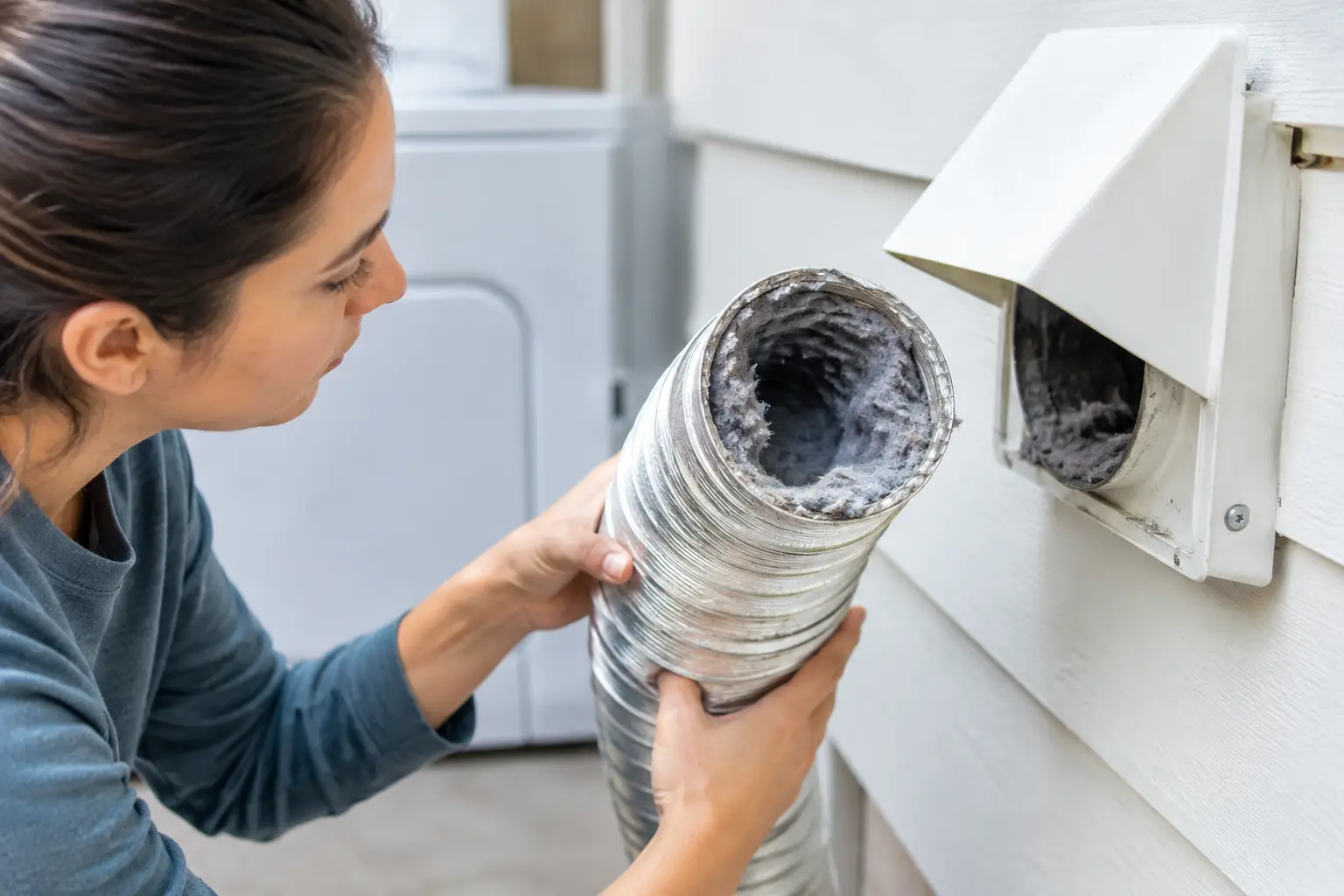
Lint gets past the screen during normal use. Over time, it collects in the duct behind the dryer, through bends in the vent run, and near the exterior hood. Pet hair, nesting material, and outdoor debris can make the restriction worse.
A clogged dryer vent is one of the most common reasons for extended drying cycles, especially in homes where the dryer is used frequently or the vent travels a long distance to the outside. You may also notice that the dryer feels unusually hot, the laundry room is warm and humid, or the exterior vent flap barely opens while the dryer is operating.
This is not just an efficiency issue. Lint is highly combustible, and restricted airflow can cause the dryer to overheat. Professional dryer vent cleaning removes buildup throughout the full vent path, not just the short section you can reach behind the appliance.
The vent hose is crushed, loose, or poorly routed
Moving a dryer too close to the wall can pinch the transition hose behind it. A crushed hose slows exhaust airflow immediately. Flexible plastic or foil-style ducts can also sag, tear, trap lint in their ridges, or separate at a connection.
A short, properly supported metal transition duct is generally the safer choice. The full vent route should have as few turns as practical and should terminate outdoors, never in an attic, crawl space, garage, or enclosed area. Routing moist dryer air indoors can encourage mold-related moisture problems and allows lint to collect where it does not belong.
Large or very wet loads need more time
Not every slow cycle means there is a vent problem. Thick towels, blankets, jeans, and bedding naturally hold more water than lightweight clothing. A washer that is not spinning effectively can also leave clothes too wet before they reach the dryer.
Try reducing the load size and separating heavy fabrics from lighter items. Check whether the washer completes its spin cycle and whether laundry is dripping or noticeably heavier than usual. If smaller, properly spun loads still take far too long, airflow or dryer performance is more likely to blame.
The dryer may not be producing enough heat
Electric dryers usually need a 240-volt power supply. If a circuit breaker has partially tripped, the drum may still turn while the heating element receives insufficient power. A gas dryer may have an ignition, burner, or gas-supply issue that prevents it from heating correctly.
Run an empty dryer for a few minutes, then carefully check whether warm air is being discharged outside. If the air is cool or there is no heat at all, stop troubleshooting beyond basic checks and contact a qualified appliance technician. Never disassemble a gas dryer or attempt electrical repairs without proper training.
Safe Checks You Can Make Before Booking Service
Start with the simple items that do not require moving the dryer or taking anything apart. Clean the lint screen, confirm the dryer is set to an appropriate heat cycle, and avoid packing the drum too tightly. Then step outside while the dryer is running and look at the exterior vent hood.
The flap should open freely and release a steady flow of warm, humid air. Weak airflow, no airflow, visible lint around the hood, or a flap that stays shut are all signs that the vent needs attention. Do not push rods, leaf blowers, or improvised tools deep into the duct. These methods can compact lint, damage the vent, disconnect a joint, or leave debris trapped farther down the line.
It is also wise to pull the lint screen and look into its housing with a flashlight. If you can see lint buildup in the chute, arrange for professional service rather than reaching into the appliance with metal tools. The area can contain sharp edges, wiring, and components that are easy to damage.
Signs the Problem Has Become a Safety Concern
A longer drying cycle should not be ignored when it comes with heat, odors, or repeated performance changes. Turn the dryer off and arrange an inspection if you notice a burning smell, scorching on clothing, excessive heat on the dryer cabinet, smoke, or a laundry room that becomes unusually hot.
Other warning signs include lint collecting behind the dryer, condensation on windows or walls near the laundry area, and an exterior vent hood that is clogged or damaged. For landlords and small-business property managers, recurring tenant complaints about damp laundry deserve a timely response. Shared or high-use laundry equipment can accumulate lint faster than a typical household dryer.
How Often Should a Dryer Vent Be Cleaned?
For many homes, a professional dryer vent cleaning every year is a practical baseline. The right schedule depends on how often the dryer runs, the length and design of the vent, the number of occupants, and whether pets contribute extra hair and lint.
A busy household, a large family, or a property with a long vent run may benefit from more frequent inspection and cleaning. Newer homes are not automatically exempt. Construction debris, long duct routes, roof exits, and tight turns can affect airflow even when the dryer itself is relatively new.
Professional service should include an inspection of the accessible vent path, removal of lint and debris using specialized equipment, and a check that airflow is properly restored. At Bob’s Air Duct, this type of thorough work is designed to help homeowners protect their appliances, reduce avoidable energy use, and feel more confident about the safety of the laundry area.
When to Call a Professional for Slow Drying
If cleaning the lint screen and reducing load size do not solve the problem, it is time to have the dryer vent evaluated. This is especially true when dry times have gradually increased, the exterior exhaust is weak, or the dryer has begun overheating. A qualified dryer vent professional can identify hidden blockages, crushed sections, disconnected ductwork, and vent configurations that are making the appliance work harder than it should.
An appliance repair technician may be the right next call when the dryer is not heating, makes unusual mechanical noises, displays an error code, or has a damaged belt, thermostat, heating element, or igniter. Sometimes both services are needed: the appliance needs repair, and the vent needs cleaning before the dryer can perform safely and efficiently again.
Dry clothes should not require multiple cycles or leave you wondering whether something is wrong behind the wall. Treat the change as an early signal, not a household annoyance. A prompt inspection can restore normal drying times and help protect the people and property you care for.