A dryer that suddenly needs two or three cycles to dry a normal load is not just frustrating. It can be one of the most common dryer vent fire warning signs. When lint, nesting material, or crushed ductwork restricts airflow, heat has nowhere to go. The dryer works harder, clothing stays damp, and combustible lint can become a serious fire risk.
Dryer vent problems often build slowly, so it is easy to explain them away as an aging appliance or a heavy load of towels. Knowing what to watch for helps you address the issue before a preventable hazard threatens your home, tenants, employees, or property.
Why clogged dryer vents create a fire risk
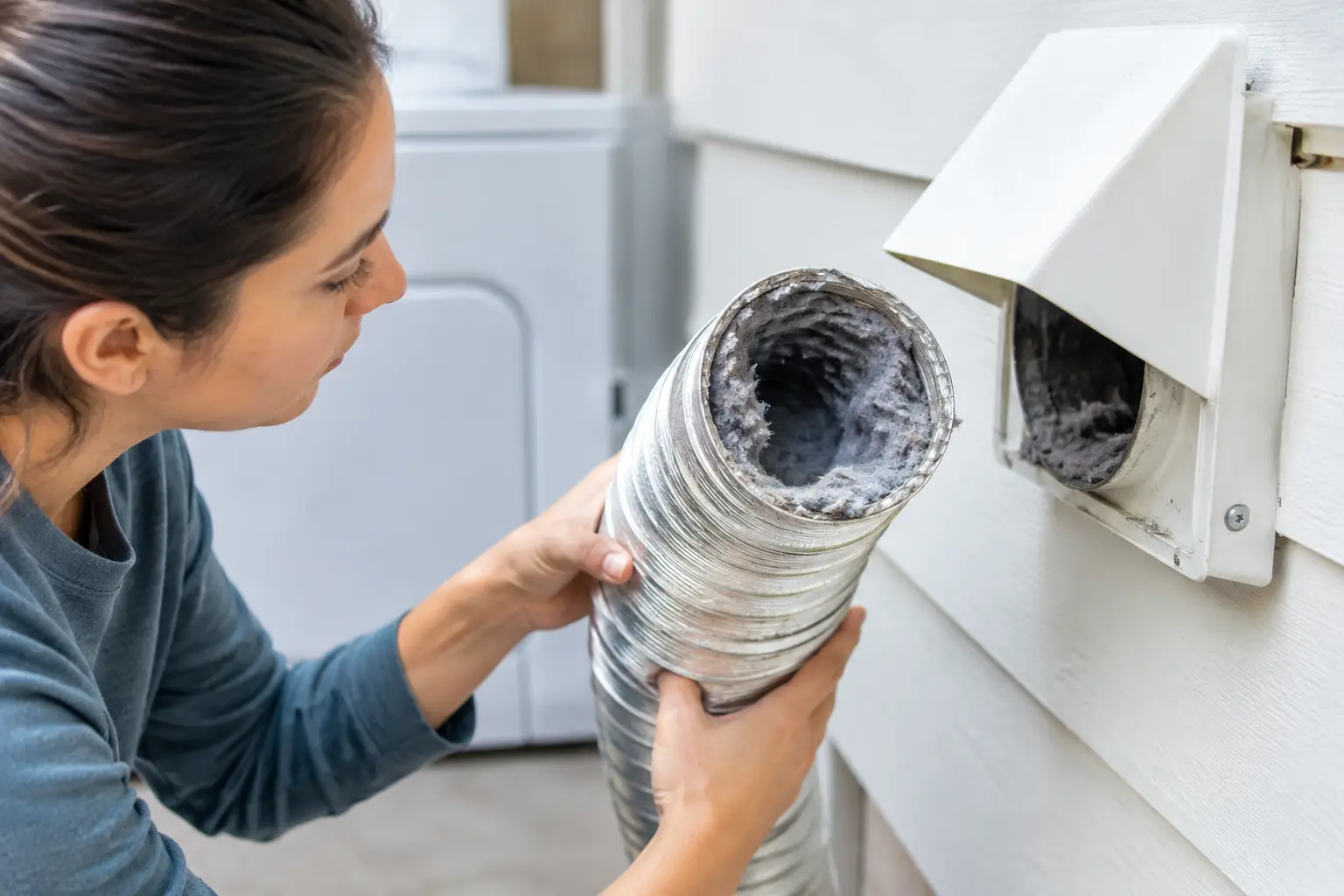
Every load of laundry releases lint. The lint screen catches much of it, but not all of it. Fine fibers pass around the screen and collect inside the dryer, transition hose, vent pipe, and exterior vent hood. A properly installed vent carries hot, moist air outside quickly. A restricted one traps that heat in the system.
Lint is highly flammable, and an overheated dryer can ignite it. The risk can be higher when the vent run is long, has several turns, exits through a roof, or has been damaged behind the appliance. Bird nests and pest debris at the exterior termination can also block airflow, especially after seasonal changes.
Cleaning the lint screen after every load is a good habit, but it does not clean the full vent path. Professional service is designed to remove buildup from the ductwork and inspect the system for conditions that limit safe exhaust flow.
8 dryer vent fire warning signs homeowners should know
1. Clothes take longer than usual to dry
This is often the first sign homeowners notice. If one cycle used to dry a standard load and now it takes two, restricted airflow may be forcing the dryer to run longer. Heavier items such as towels and bedding naturally take more time, but a consistent change across most loads deserves attention.
Long dry times also raise energy use and put extra wear on the heating components. Waiting for the problem to get worse is rarely the economical choice.
2. The dryer or laundry room feels unusually hot
A running dryer produces heat, but the appliance exterior should not feel dangerously hot. The laundry room should not become excessively warm or humid during a typical cycle. When exhaust cannot move outdoors, heat can back up around the dryer and into the room.
Do not place stored boxes, laundry baskets, paper products, or other combustible materials near a hot dryer. If the unit is overheating, stop using it until the vent and appliance can be evaluated.
3. You smell something burning
A burning odor is a warning that calls for immediate action. It may come from lint getting too hot, an overheating component, or an electrical problem inside the dryer. The cause cannot be safely identified by smell alone.
Turn the dryer off, unplug it if you can do so safely, and do not restart it. If you see smoke or flames, leave the area and call 911. For a burning odor without an active fire, arrange for a qualified appliance technician or dryer vent professional to inspect the system before using it again.
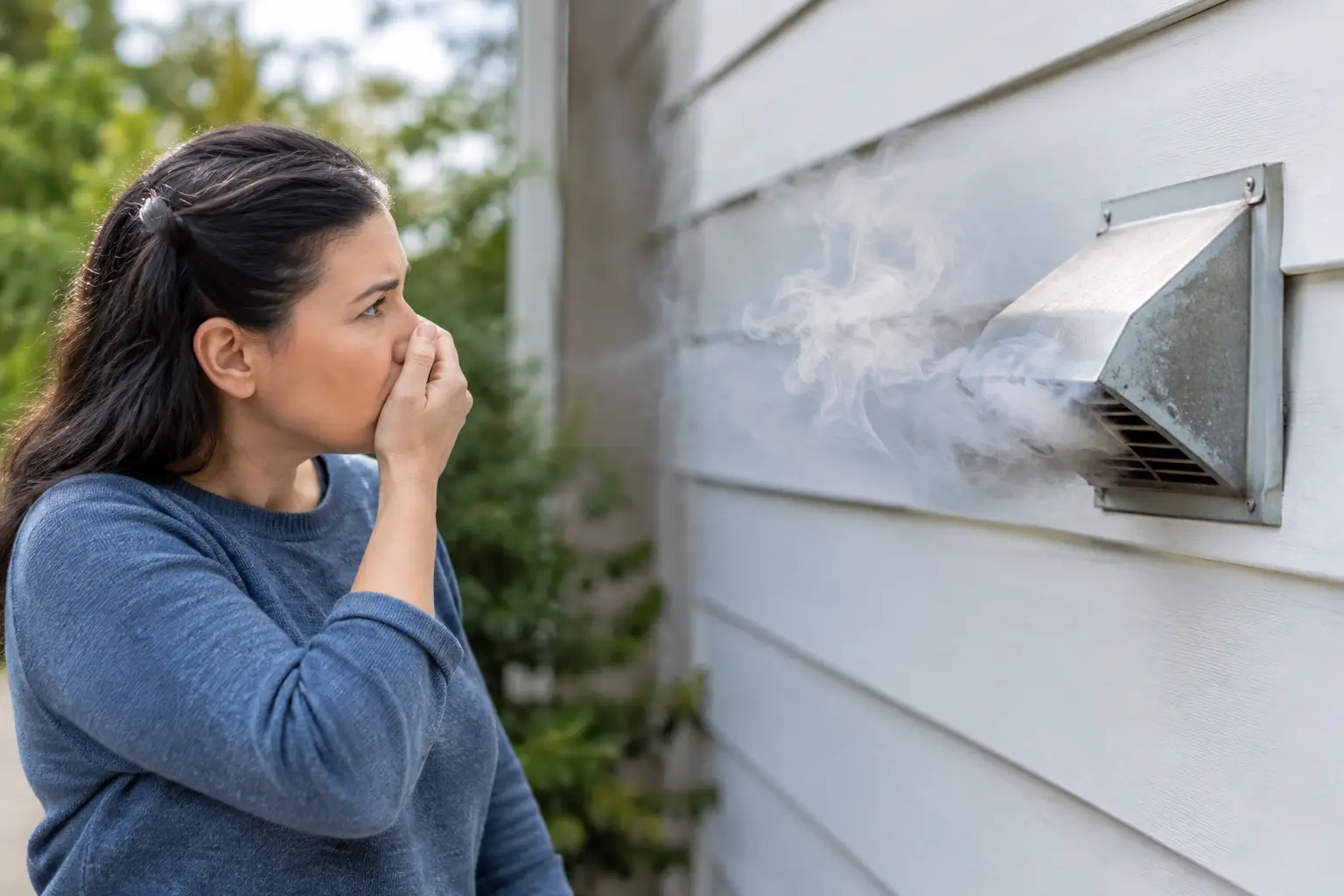
4. The exterior vent flap barely opens
While the dryer is running, the exterior vent hood should release warm air and the flap should open freely. If there is little or no airflow, or the flap remains closed, the vent may be clogged or obstructed.
Check from the ground only. Roof terminations and difficult-to-reach vents require proper equipment and should be handled by a trained professional. Never insert your hand deeply into the vent opening, where sharp edges, pests, or compacted debris may be present.
5. Lint is visible around the dryer or outdoor vent
Lint around the laundry area is not always a sign of a clogged vent, but it should not be ignored. Buildup behind the dryer can indicate a loose, disconnected, crushed, or leaking transition duct. Outdoors, lint accumulating around the vent hood may mean the exhaust is struggling to escape.
A disconnected vent is especially concerning because it can release heat, moisture, and lint inside walls, crawlspaces, attics, or utility areas instead of directing it outdoors.
6. The dryer shuts off before the cycle is finished
Many dryers have safety sensors that stop the machine when internal temperatures become too high. While this feature can reduce danger, it is not a repair. Repeated shutdowns may point to restricted ventilation, a failing part, or another appliance problem.
Avoid repeatedly restarting a dryer that keeps shutting down. Continued use can turn a warning into costly appliance damage or a fire hazard.
7. Your clothing is extremely hot after drying
Warm clothing is expected. Clothing that feels unusually hot, smells scorched, or leaves you unable to comfortably handle it is not. Excessive heat can mean the dryer is not exhausting correctly or that the appliance itself needs service.
Synthetic fabrics are particularly vulnerable to heat damage. Treat this symptom as a reason to stop using the dryer rather than simply choosing a lower heat setting for the next load.
8. It has been more than a year since the vent was cleaned
Not every hazard provides a dramatic warning. Lint can collect gradually inside a vent that looks perfectly normal from the laundry room. For many homes, annual dryer vent cleaning is a sensible preventive schedule.
The right frequency depends on usage and the vent layout. Larger households, properties with frequent laundry turnover, pet owners, salons, shared laundry rooms, and businesses that wash towels or uniforms may need service more often. A long vent route or one with multiple bends may also require closer attention.
What to do when you notice a warning sign
If you detect smoke, flames, or an active fire, get everyone outside and call 911. Do not attempt to fight a dryer fire unless it is safe to do so and you are trained and equipped. Property can be replaced. People cannot.
For non-emergency warning signs, stop using the dryer until the problem is assessed. Clean the lint screen, then look behind the appliance only if it can be moved safely without straining the gas line, electrical connection, or duct. A flexible foil or plastic vent connector is not a long-term safe solution because these materials can sag, trap lint, and are more vulnerable to damage. Proper metal venting and secure connections support better airflow.
Avoid trying to solve a deep blockage with a household vacuum or a random brush pushed into the duct. Those attempts may leave debris farther down the line, damage the vent, or fail to address a crushed section, improper routing, or exterior obstruction. A thorough service includes cleaning the full accessible vent path, checking airflow, and identifying installation concerns that affect performance.
Professional dryer vent cleaning protects more than the dryer
A clear vent helps the appliance dry loads faster, which can lower unnecessary energy use and reduce wear on the dryer. Just as importantly, it removes combustible lint from an area where heat is present every time you run a load.
For landlords and small-business property managers, regular dryer vent maintenance also helps protect tenants, customers, equipment, and the building itself. Documented preventive care is a practical part of responsible property upkeep, particularly in multi-unit properties or high-use laundry areas.
At Bob’s Air Duct, our technicians use specialized equipment to remove lint and debris while evaluating the vent system for airflow restrictions and visible concerns. You receive straightforward information about what was found, what was cleaned, and whether the system needs additional attention.
A dryer should make laundry easier, not leave you wondering whether it is safe to run another cycle. If drying times are climbing, heat is building, or airflow outdoors seems weak, schedule a professional dryer vent inspection and cleaning before the next load becomes a risk.