A fireplace can make a Maryland home feel welcoming on a cold evening, but the chimney above it does a serious job. Every fire sends smoke, soot, gases, and small particles through that passage. A professional chimney sweep service removes the buildup left behind and helps confirm that smoke has a clear, safe path out of your home.
For homeowners, landlords, and small-business property managers, this is not just a cleaning task to place on a long maintenance list. It is practical fire prevention and property protection. A chimney that looks fine from the hearth can still have creosote deposits, nesting material, loose debris, or damage higher in the flue where it cannot be seen.
Why chimney cleaning is a safety service
Wood smoke contains compounds that cool and condense on the inside of a chimney. That residue is called creosote. In small amounts, it may look like dry, flaky soot. Over time, however, it can become thicker, tar-like, or glazed onto the flue walls. Creosote is combustible, which means enough heat or a spark can ignite it inside the chimney.
A chimney fire is not always dramatic or obvious. Some burn quickly and quietly, yet still expose the flue liner, masonry, and nearby framing to intense heat. Damage can make future fires less safe, allowing heat, smoke, or combustion gases to move where they do not belong.
Cleaning also addresses other common obstructions. Leaves, broken mortar, animal nests, and fallen chimney components can restrict airflow. When smoke cannot rise properly, it may spill back into the room. That can leave unpleasant odors and soot stains, but more importantly, it can create an unsafe indoor environment.
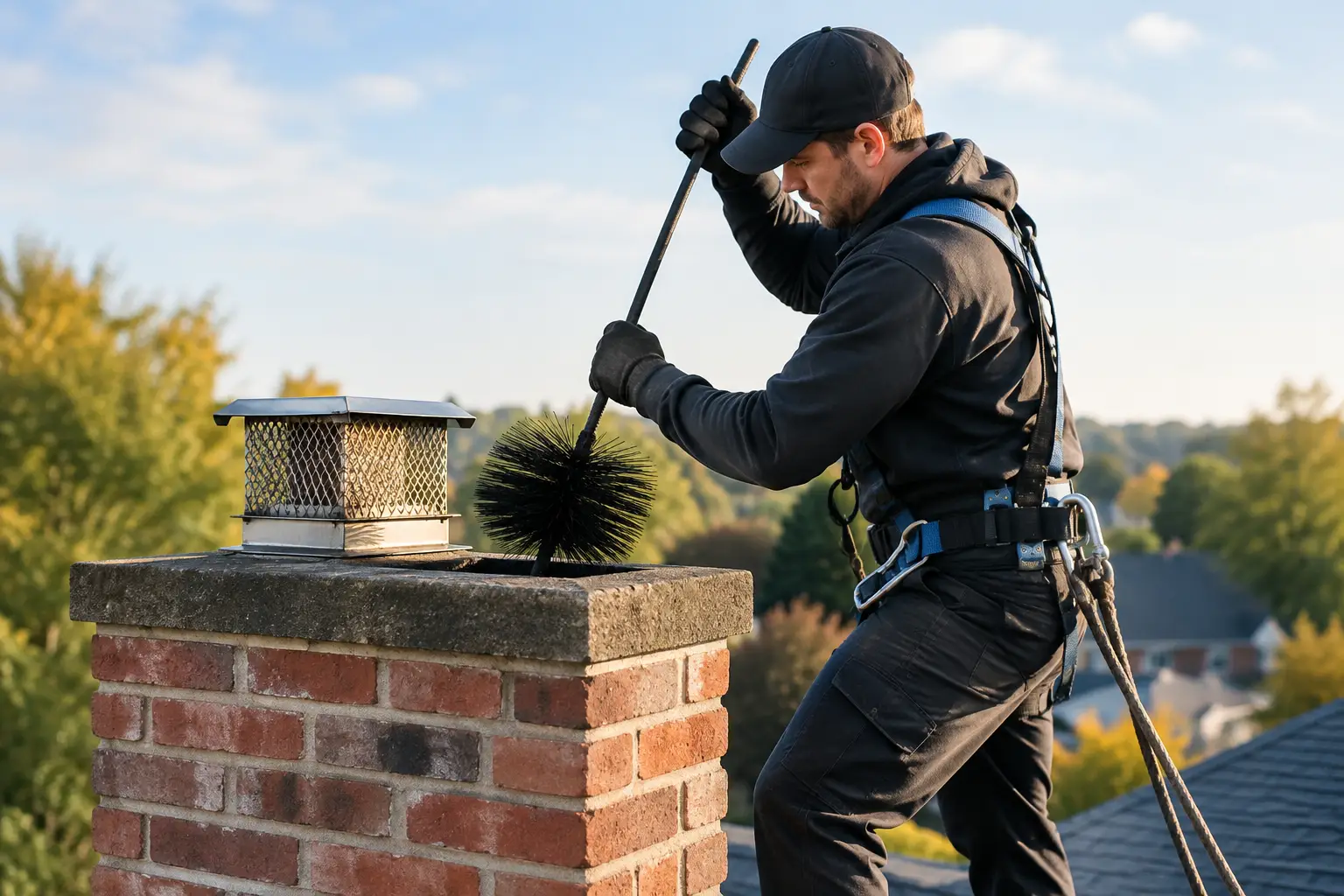
A qualified technician does more than brush the visible firebox. The work should include a careful inspection of accessible chimney components, removal of soot and creosote, and attention to the flue passage where buildup creates the greatest concern. Specialized equipment and proper containment help keep loosened debris from spreading through the living area.
When to schedule a chimney sweep service
For many homes, an annual chimney inspection is a sensible starting point, especially before fireplace season. Whether a full cleaning is needed depends on how often the fireplace is used, what fuel is burned, the condition of the chimney, and what the inspection finds. A fireplace used a few times each winter may require less cleaning than one used several nights a week, but both still need professional attention.
Late summer or early fall is often a convenient time to book. It gives you time to address cleaning needs or repairs before the first cold-weather fire. That said, there is no need to wait for a particular season if you notice warning signs or have recently moved into a home with an unknown chimney maintenance history.
Schedule service sooner if you notice four or more concerning changes around the fireplace and chimney:
- Smoke enters the room when a fire is burning, even after the damper is open and the fire is established.
- You smell strong smoky, musty, or campfire-like odors when the fireplace is not in use.
- You see dark, thick deposits in the firebox or near the damper.
- Animals, chirping, scratching sounds, leaves, or other debris seem to be coming from the chimney.
- A fire burns poorly, produces unusual amounts of smoke, or leaves soot around the fireplace opening.
A recent chimney fire, storm damage, water leaks, or a long period without use also calls for an inspection before lighting another fire. Do not assume a gas fireplace is exempt. Gas appliances generally produce less soot than wood-burning fireplaces, but their venting systems still need inspection for blockages, deterioration, and safe operation.
What happens during a professional chimney cleaning
A thorough appointment begins with an assessment of the fireplace and accessible chimney system. The technician looks for signs of creosote, soot, obstructions, moisture concerns, damaged components, and draft problems. The goal is to understand what is in the flue before cleaning begins, not simply to perform the same task in every home.
Next, the work area is protected. Professional chimney sweeps use containment methods and high-powered vacuum equipment designed to capture loosened soot and debris. Brushes, rods, and other specialized tools are selected based on the chimney’s configuration and the type of buildup present. This is far more effective and safer than trying to reach into the firebox with household tools.
After the flue and firebox are cleaned, the technician checks the accessible areas again. If there are signs that require repair, such as a damaged liner, failing damper, cracked masonry, or a compromised chimney cap, you should receive a clear explanation of the concern. Cleaning can remove combustible material, but it cannot correct structural problems. Addressing both when necessary is what protects the system over the long term.
At Bob’s Air Duct, the approach is centered on thorough work, respectful in-home service, and straightforward communication. You should understand what was found, what was cleaned, and whether any next steps are recommended before the appointment is over.
How fireplace habits affect creosote buildup
The kind of fire you build has a real effect on the chimney. Burning wet or unseasoned wood creates cooler, smokier fires that leave more creosote behind. Wood should be properly seasoned and stored in a dry location. Avoid burning trash, cardboard, treated lumber, or coated wood products in a fireplace. They can create excessive smoke, release harmful fumes, and leave residues that do not belong in the flue.
Small, hot fires with adequate airflow generally burn cleaner than slow, smoldering fires. Open the damper fully before lighting a fire, and make sure it remains open until the fire and embers are completely out. If your fireplace repeatedly struggles to draw smoke upward, do not keep experimenting with bigger fires. A chimney inspection can identify whether the issue is an obstruction, a draft condition, or a component problem.
It also helps to remove cooled ashes regularly, leaving only a thin layer if recommended for your specific fireplace. Ash management will not replace a chimney sweep, but it keeps the firebox easier to use and makes it easier to spot unusual soot or debris.
Cleaning, inspection, and repair are not the same thing
These services work together, but they serve different purposes. A cleaning removes soot, creosote, and debris. An inspection evaluates the chimney’s condition and looks for safety concerns. Repair restores parts that are damaged, worn, or no longer functioning properly.
Sometimes an inspection shows that cleaning is all a chimney needs. In other cases, cleaning reveals a cracked liner or damaged cap that had been hidden by buildup. The right service depends on the condition of the system, which is why a professional assessment matters. Skipping an inspection because the fireplace seems to work normally can allow a small issue to remain unnoticed until it becomes more costly.
For rental properties and commercial spaces with fireplaces or wood-burning appliances, routine documentation is especially helpful. Scheduled maintenance supports safer occupancy, helps property managers plan ahead, and reduces the chance of an urgent issue during the busiest part of the heating season.
A cleaner chimney supports a more comfortable home
Chimney maintenance is one part of caring for the air systems in your property. Soot odors, backdrafting, and airborne debris can affect comfort well beyond the fireplace room. Keeping the chimney clear supports better airflow during fireplace use and helps reduce the chance of smoke or fine particles entering your indoor space.
If your family enjoys regular fires, your chimney deserves the same preventive attention as your HVAC system and dryer vent. Book service before the schedule gets crowded, use properly seasoned wood, and treat new odors or smoke problems as a reason to have the system checked. A clean, inspected chimney lets you enjoy the warmth of a fire with greater confidence and peace of mind.